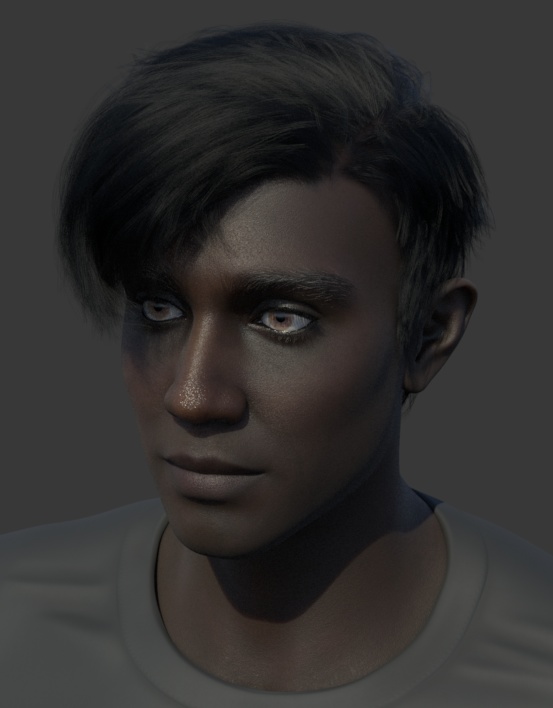
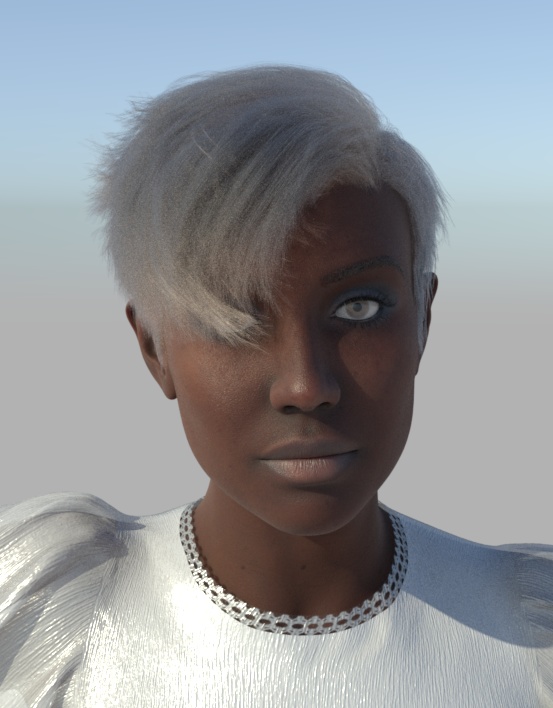
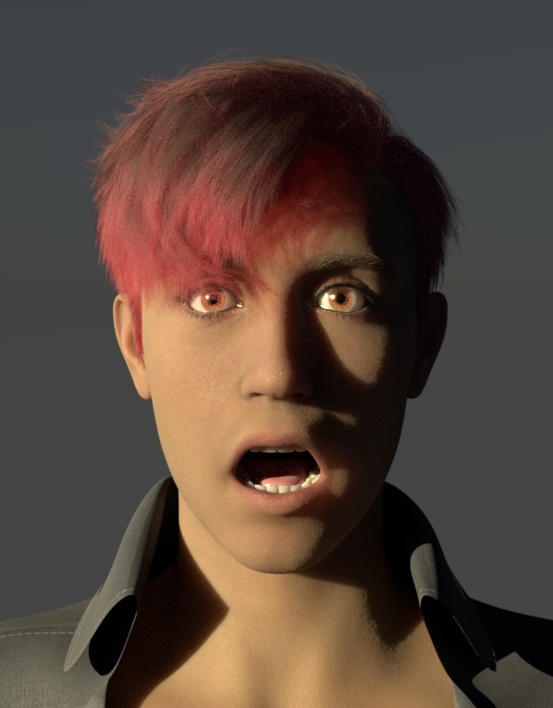
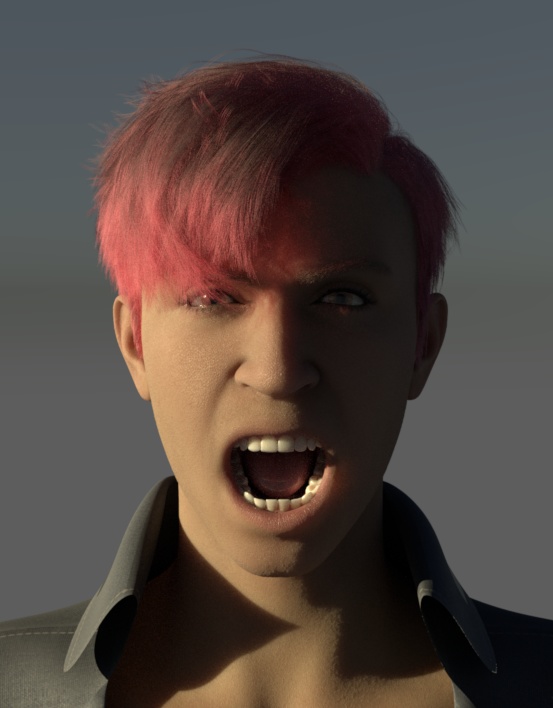
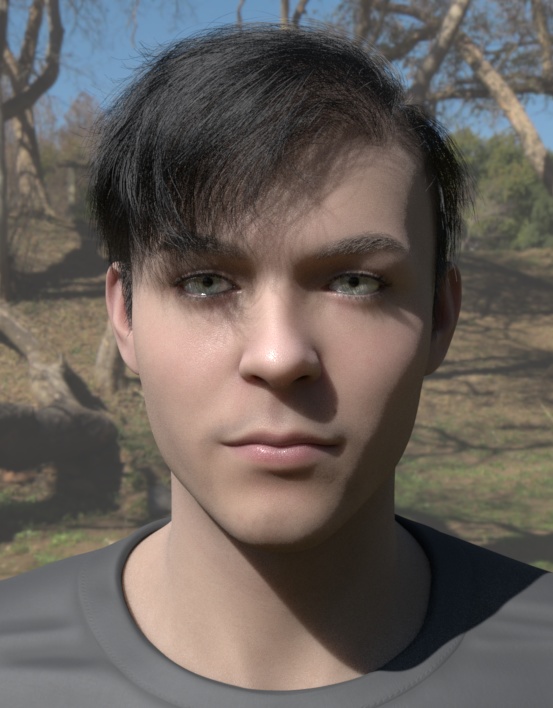
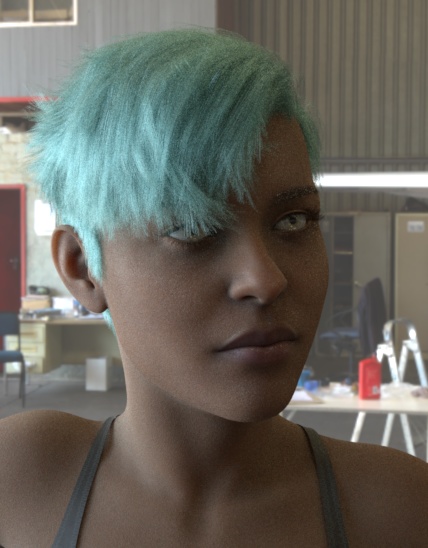
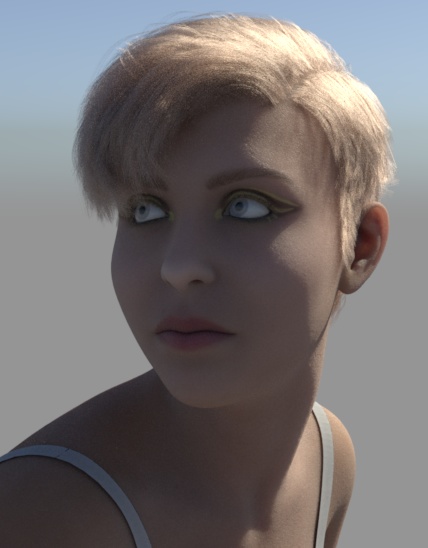
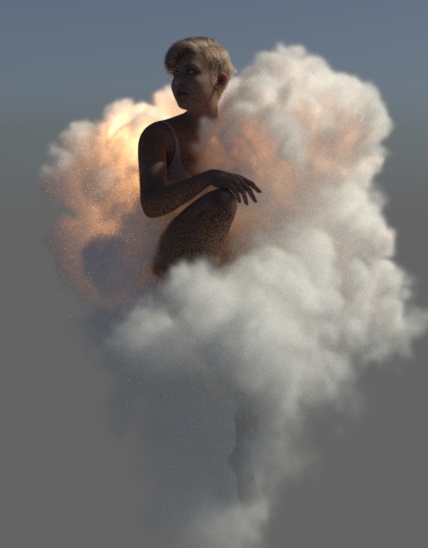
NSI4Daz puts 3Delight NSI inside Daz Studio 6. Your characters, hair, skin, lights, and cameras stay in Studio. Hit render for Live IPR and final frames from the same path-tracing pipeline.
No tessellation for hair, subdivs, displacement
No specialized hardware required
Unified Sampling: fewer knobs to babysit
NSI4Daz is completely free during Early Access. No license keys, activation, payment or subscription required.
Builds expire periodically to encourage everyone to stay up to date.
Our long-term mission is to keep NSI4Daz permanently free through community support.
Have questions or need enterprise support? Get in touch.
A 3Delight NSI plugin for Daz Studio 6. Keep working in Studio while rendering with a modern path tracer: Live IPR and Final share the same pipeline.
Use the characters, hair, and Store materials you already own. Add Physical Sun & Sky, HDRI, OpenVDB volumes, multi-light AOVs, and native 3Delight NSI shaders when you want more control.
Live look development and final frames in one pipeline.
Built for the Daz content you already use.
Studio lights, Physical environments, volumetrics, and volumes.
Shaped by Early Access feedback.
NSI4Daz (3Delight NSI for Daz Studio) is developed by J Cube Inc., an independent software engineering company based in Yokohama, Japan. We build focused, high-quality software around ideas we believe deserve to exist.
For years, Daz artists relied on the original 3Delight for final-quality renders. That generation of rendering technology was built around established interfaces and shading systems, including the RenderMan Interface (RI) and RenderMan Shading Language (RSL).
3Delight NSI takes a different path. Built around the proprietary Nodal Scene Interface (NSI), it provides a modern foundation for interactive rendering, Open Shading Language (OSL), scripting, multithreading, serialization, and extensible scene editing. Its node-based design treats scene construction and modification as the same sequence of explicit operations: create, set, connect, delete. The result is a compact interface designed for interactive updates and concurrent use.
While NSI was being developed, Daz Studio adopted NVIDIA Iray as its primary renderer. The original 3Delight integration remained behind and was retired in 2025. Iray is built on the Iray SDK, which inherits much from the mental images rendering lineage, and uses Material Definition Language (MDL) for materials. Not every capability of the Iray SDK is exposed through Daz Studio’s integration; motion blur is one notable example. Iray’s GPU acceleration is closely tied to NVIDIA’s hardware ecosystem.
The two systems take different approaches to scene representation and shading:
Iray uses a scene database and transaction model. NSI exposes a compact, node-based interface of explicit edits: create, set, connect, delete.
Iray uses MDL to define the interface of physically based materials. MDL is not a general programming language, and artists cannot freely author arbitrary new material types the way they can with a programmable shading language. 3Delight NSI integrates Open Shading Language (OSL), an open, programmable shading system whose closure-based model lets shaders describe material response and emission.
In NSI, ordinary geometry can emit light through its shader, with no dedicated light-source node required. Iray also supports emissive materials; the difference lies in how shading and scene elements are represented and connected.
These choices give NSI a uniform model for scene editing and a flexible, programmable approach to shading.
NSI treats instancing as a first-class part of the scene description: shared geometry, per-instance overrides, and small edits instead of rebuilding the whole scene. That matters in Daz Studio because geometry shells (skin details, dirt, tattoos, overlays) often duplicate geometry and materials. NSI’s model makes a share-oriented path natural: keep the base mesh shared, push placement and shading through instance attributes, and update incrementally.
NSI4Daz already follows that path where possible, including mid-Live updates. Deeper shell sharing remains on the Early Access roadmap.
We believe Daz artists deserved another option: a renderer built around a different set of priorities, without requiring a particular GPU vendor, and without being limited to whatever an existing integration happened to expose. The full feature set lives on the Features page.
NSI4Daz brings 3Delight NSI into Daz Studio 6, combining physically based path tracing with highly parallel CPU rendering, detailed skin and hair shading, atmospheric and volumetric effects (including OpenVDB), HDRI lighting, Physical Sun & Sky, multi-light AOVs, motion blur, depth of field, and analytical rendering of supported hair curves and subdivision surfaces. Sub-pixel displacement adds fine surface detail without pre-tessellating supported base geometry. Live IPR and Final share the same rendering pipeline, so what you tweak in Live is what Final finishes.
Optional GPU-accelerated denoising works with compatible Apple, Intel, AMD, and NVIDIA hardware, with CPU fallback when a supported GPU is unavailable. Rendering itself does not require a dedicated GPU or tie you to one hardware vendor.
Caustics depth and still more efficient geometry-shell sharing remain on the Early Access roadmap. Development and releases follow their own schedule, independent of Daz Studio’s release cycle and NVIDIA’s hardware calendar.
Daz Studio’s built-in renderers each have a purpose. There is still room for another approach.
The result is another way to finish images in Daz Studio: a modern scene-editing architecture, sophisticated shading and geometry, and hardware flexibility, without buying a particular GPU just to hit Render.
And what about quality and performance? We’ll let you be the judge.
First public early access for Daz Studio 6.25.
Daz Studio 6.25.2026.14722 or later on macOS 13+ (Apple Silicon or Intel) or Windows 10+. Claim a build for your platform, install the plugin, and pick 3Delight NSI as your renderer.
Different architecture, different priorities. Iray’s Studio path is NVIDIA-focused and limited by what the host integration exposes (motion blur is a common example). NSI4Daz is highly parallel CPU path tracing with 3Delight NSI: analytical hair and subdivision where supported, Unified Sampling, motion blur and DOF, multi-light AOVs, and a scene model built for shared geometry and small edits. Optional denoise works on Apple, Intel, AMD, or NVIDIA GPUs, with CPU fallback. See History for the longer comparison.
Early Access supports common Store materials including Uber, PBRSkin, layered textures, multi-UV / UDIM, and cutouts. Results depend on the shader network; coverage keeps expanding from artist feedback. You can also author native 3Delight NSI surfaces (Principled, Skin, Hair, Glass, CarPaint, Toon, ToonGlass, ShadowMatte, and more).
Yes. No download limit. Each request sends a fresh signed link. Builds expire periodically during Early Access: download a newer build before yours expires to keep going.
Yes. Contributions are voluntary: tip once or as often as you like. At $50 cumulative with the same email, we automatically invite that address to the private Early Access tracker.
Our goal is to keep NSI4Daz permanently free through community support. The first milestone is $35,000 by April 30, 2027, which lets us guarantee free access through October 31, 2027.
For now it is proprietary freeware, so we can stay fast and focused during Early Access. We may reconsider open sourcing parts or all of it as the project and community funding grow.
Daz Studio artists who want final-quality path tracing for characters, hair, skin, and environments, without depending on a specific NVIDIA GPU. Early Access is free: give it a try.
NSI4Daz is free during the Early Access phase. Our long-term mission is to keep it permanently free for Daz Studio artists through voluntary community tips and sponsorships.
Our first funding milestone is $35,000 by April 30, 2027, sized for a Studio plugin on macOS and Windows. Reaching this milestone guarantees NSI4Daz remains free through at least October 31, 2027. Surplus accelerates Studio integration, materials coverage, Display features, and the roadmap.
When your cumulative contributions reach $50 with the same email address, we automatically send you an invitation to our private GitLab tracker to follow development, file bugs, and vote on features.
Interested in technical partnerships, Studio integration work, feature development, enterprise support or sponsorship opportunities?